Delivered through our partner network · enterprise logos placed with permission
















Connecting US small business owners and CTOs with vetted AI consulting partners who deliver real automation, smarter workflows, and measurable ROI without internal overhead.
Salesforce says that workers are spending almost 41% of their time on repetitive manual tasks rather than high-value activities, and that's an opportunity to reduce both time and cost. Without workflow automation, small businesses waste time every day with inefficient workflows, disjointed systems and manual administration that hinder growth and slow productivity.
According to McKinsey, over 78% of companies are actively employing AI in at least one business process. Faster than those who are late to the game, businesses already leveraging AI automation, generative AI and machine learning are able to enhance productivity and customer engagement.
Data-driven companies are increasing by an average of over 30% per year, according to Forrester Research. Most small businesses that do not have predictive analytics, centralized reporting or any good business intelligence base, are forced to make decisions on incomplete information instead of measurable insights and KPIs of an operation.
More than 65% of organisations are constrained from using AI due to lack of skills within the organisation. Small companies often lack the expertise and resources in AI consultants, technical experts, and implementation support to assess AI tools for small business and ensure the technology investments support the business objectives.
Studies found that almost 70% of all digital transformation projects are unsuccessful because they're poorly aligned with strategies. Without a clear AI strategy for small businesses, small businesses often purchase AI software without realizing that it will not be used or adopted, will not be integrated, and will not generate the expected ROI.
80% of consumers are more likely to buy from companies that provide personalized experiences, according to Epsilon research. Without AI-powered tools for personalization, customer engagement automation, or predictive analytics, it's difficult for companies to keep up with those already leveraging intelligent AI-driven customer interaction strategies.
Be aware of existing processes, tech infrastructure, data readiness, and operational gaps prior to going on the AI journey. Identify real-world cases for using AI, evaluate automation potential, and establish a framework to facilitate scalable implementation of AI, operational efficiency, and quantifiable business transformation results.
In-House 01/ AI Readiness Assessment
Create AI strategies in line with business objectives, operational priorities and growth plans. Outline the stages of implementation, identify automation opportunities that have a significant impact, and set up a realistic AI roadmap that will enhance productivity, customer interactions, and long-term ROI in the context of small businesses.
In-House 02/ AI Strategy and Roadmap
Implement systems and frameworks to automate repetitive workflows, operational bottlenecks and manual business processes with the help of AI. Enhance productivity, minimize administrative burden, streamline workflows and facilitate growth and scalability with structured process automation and optimized operational performance.
In-House 03/ Business Process Automation
Evaluate AI solutions for small businesses in terms of business suitability, scalability, integration needs and expected return on investment. Identify and remove any unnecessary software investments while finding implementation partners and platforms to suit the AI workflow, customer engagement and long-term business objectives.
In-House 04/AI Tool Selection
Integrate AI capabilities into current systems, processes, and business applications without disruption to your daily business. Enhance data integration, automate processes and gain greater visibility through operations, and enable seamless AI adoption for small business teams, customer operations, and digital transformation efforts.
In-House 05/AI Implementation
Track performance of AI implementation, workflow effectiveness and operational KPIs following implementation. Continuously refine the system, analyze performance, and provide strategic advice for future improvement to enhance automation results, optimize AI-driven processes, and ensure long-term sustainability, meeting changing business needs.
In-House 06/ AI Performance Optimization

Our partners assess your current operations and recommend the right AI path for your business goals and budget.
According to McKinsey, AI-driven demand forecasting can cut inventory inaccuracies by as much as 50%. Use predictive analytics and automation to enhance pricing, boost inventory planning and enable smarter operational efficiency in retail settings.
Scheduling, intake, and patient communication processes can be automated with AI-powered systems. Enhance productivity, streamline administration, and boost engagement for healthcare and wellness practices, all while promoting efficiency.
Speed up contract analysis, automate CRM workflows and optimize client management processes; all with the help of machine learning and workflow automation. Optimize processes with AI to boost efficiency, cut down on manual review time, and promote scalable business operations.
In certain business settings, AI systems can cut financial forecasting mistakes by over 50%, according to PwC. Put predictive analytics and AI-powered monitoring solutions into practice to enhance fraud detection, forecast accuracy, and visibility into accounting processes.
Utilize AI agents and automation tools to prioritize leads, automate follow-ups with clients, and enhance response rates. Enhance customer engagement, boost conversion rates and drive scalable growth with intelligent use of AI in small business operations.
Reduce waste, enhance prediction accuracy, and enhance guest experiences by leveraging AI for inventory management and sentiment analysis. Ensure business efficiency, streamline workflows and promote long-term business growth in hospitality settings.
Engage seasoned AI consulting firms that have expertise in automation, AI adoption for small businesses, process optimisation, and scalable AI strategies to support business objectives and ROI results.
Connect companies with AI experts who know the industry needs, priorities and goals of the business. Enhance implementation holistically, matching AI strategy, technology suggestions and workflow automation to actual business needs.
Collaborate with partners with background knowledge of US privacy laws, compliance parameters, and small business challenges. Provide assistance in the responsible use of AI, data protection, and scalable solutions for SMB use cases and customer needs.
Offer multiple engagement opportunities based on operational needs and priorities of business owners and technical leaders. Provide expert consulting advice and partner alignment to support strategic AI planning and technical implementation.
Ensure visibility from readiness assessment to AI implementation and optimization throughout the entire AI consulting engagement. Increase accountability, lessen uncertainty, and help facilitate seamless digital transformation and workflow automation efforts.
Engage in a single structured engagement process to oversee communication, implementation, and work with consultants. Make AI adoption more straightforward for small business teams and enhance business objectives, operational workflows, and technology execution.
Every quote reflects a real engagement. No stock photos, no composite personas — just clinical leaders who moved from stuck to shipped.
"Cognixis didn't sell us a tool — they fixed our compliance architecture first. In eight weeks we went from three stalled clinical AI pilots to a governance framework our board and clinical risk committee actually signed off on. Six months later our predictive readmission model is reducing 30-day readmissions by 23% across two hospital sites."
"We'd failed two previous EHR-AI integration attempts before Cognixis. They diagnosed the data governance gap in the first week and matched us with a partner who actually understood FHIR. We shipped in 14 weeks."
"Their governance framework got us through TGA SaMD classification and NSQHS review without a single compliance finding. That outcome alone justified the entire engagement cost within the first quarter."
"As a GP practice we assumed enterprise AI wasn't accessible at our scale. Cognixis scoped a clinical documentation automation pilot that paid for itself in 9 weeks — and we didn't need a full IT team to run it."
"What I valued most was the no-vendor-bias stance. Every recommendation was defensible on clinical grounds, not tied to a commercial relationship. That's genuinely rare in healthcare AI consulting."
Cognixis matches US small business owners and CTOs with the right AI consulting partner based on industry, budget, and goals.

Long-form POVs, governance frameworks, and field benchmarks on what actually works in production healthcare AI. Hover to pause.

The structure, artifacts, and review cadence that satisfies TGA SaMD requirements without slowing deployment velocity.
How to connect AI systems to your EHR without creating data silos, compliance gaps, or HL7 translation nightmares.
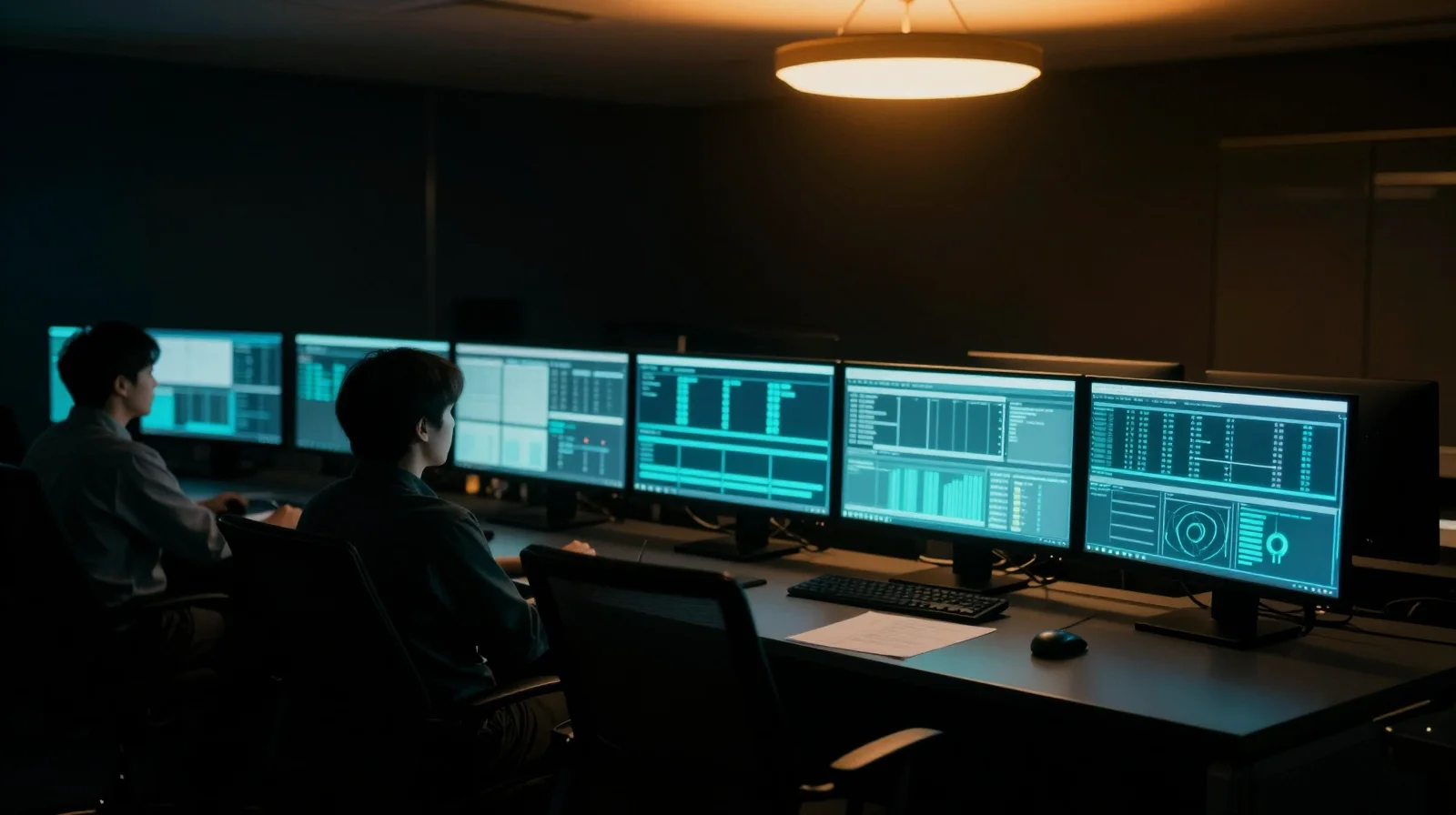
The model design, data pipeline, and governance framework behind a validated predictive risk deployment at a regional hospital network.

A practitioner's reference for navigating overlapping privacy obligations when deploying AI across clinical data environments.

The five most common validation gaps that surface during post-go-live TGA audits — and how to close them before deployment.

Change management, privacy disclosure, and workflow design patterns from practices that achieved 70%+ documentation time reduction.

Why 60% of CDSS deployments are bypassed within 6 months — and the alert design and workflow integration principles that reverse it.

How one imaging network deployed AI-assisted triage across 8 sites while passing ARTG review and maintaining radiologist confidence.
The structure, artifacts, and review cadence that satisfies TGA SaMD requirements without slowing deployment velocity.
How to connect AI systems to your EHR without creating data silos, compliance gaps, or HL7 translation nightmares.
The model design, data pipeline, and governance framework behind a validated predictive risk deployment at a regional hospital network.
A practitioner's reference for navigating overlapping privacy obligations when deploying AI across clinical data environments.
The five most common validation gaps that surface during post-go-live TGA audits — and how to close them before deployment.
Change management, privacy disclosure, and workflow design patterns from practices that achieved 70%+ documentation time reduction.
Why 60% of CDSS deployments are bypassed within 6 months — and the alert design and workflow integration principles that reverse it.
How one imaging network deployed AI-assisted triage across 8 sites while passing ARTG review and maintaining radiologist confidence.
AI consulting for small businesses can guide the organizations in recognizing, planning, and executing AI-driven solutions to enhance operational efficiency, automation, customer engagement, and productivity. These services can encompass AI readiness assessments, workflow automation consulting, AI strategy development, tool selection, systems integration, and continuous support for optimizing AI applications within small business operations.
The cost of these items depends on the size of the project, how complex it is, the size of the business, and the amount of AI automation that is needed. Projects that involve simply assessing readiness for AI or optimizing workflows can be much cheaper than enterprise-wide AI implementation programs that use custom AI solutions, machine learning models, or predictive analytics systems.
When trying to improve workflows or start using AI reporting, some companies start seeing benefits in their operations within just a couple of weeks. You might need to wait several months for the measurable ROI and efficiency gains from larger AI transformation projects that integrate systems or involve predictive analytics to become apparent.
Yes. Many small businesses are going for AI consulting services, especially because they don't have the technical expertise themselves. Instead of having an in-house engineering or AI team, AI consulting partners can help through the entire process, from developing AI strategies to planning their implementation, identifying ideal vendors, setting up automation, and supporting employees in adopting new systems.
An AI consultant is more geared toward strategy, alignment with business goals, process optimisation, ROI planning, and providing guidance on implementing AI solutions; an AI developer, on the other hand, is more focused on creating technical systems or software applications. AI consulting services enable businesses to pinpoint suitable AI use cases and technologies before development and deployment.
Usually, businesses are ready to engage AI consulting services when they notice repetitive processes, inefficiency in operations, customer engagement challenges, or disconnected systems are negatively affecting their growth. The AI readiness assessment process can be used to assess the existing processes, data quality, and business objectives, and to identify opportunities for automation, before the widespread adoption of AI tools begins.